An online course for caregivers of kids 2 to 5
Know what to do when your toddler digs in.
Short video lessons for the moments that turn into standoffs: getting out the door, leaving the playground, bedtime, hitting and meltdowns. What to try first, what to do when it doesn’t work, and how to reconnect after.
About 2 h of short videos, for parents and any other caregiver. Watch at your own pace.
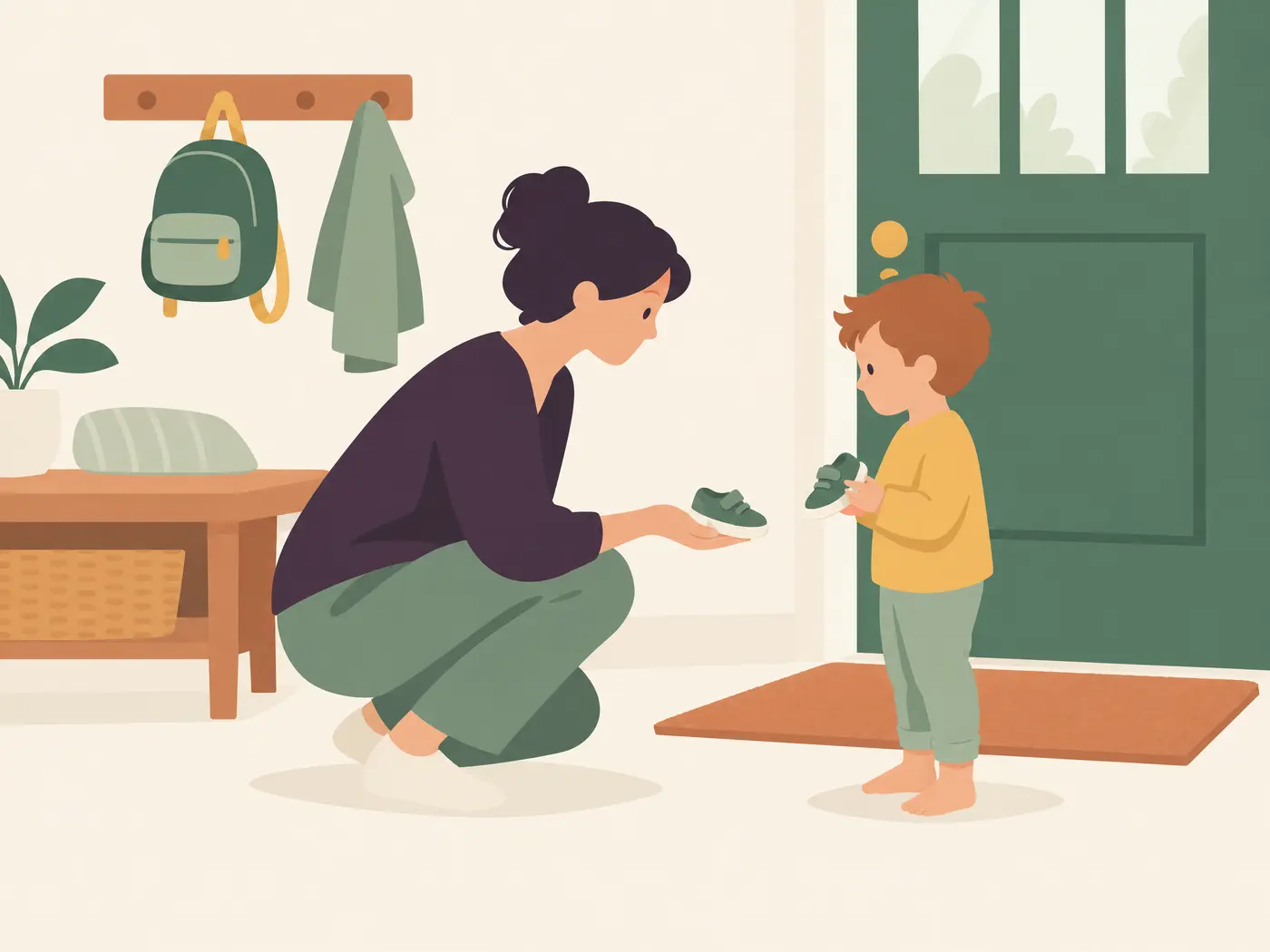
Most toddler advice stops right where the hard part starts.
A philosophy, not a plan
You’ve read that feelings matter. The course shows what to do at 7:45 with one shoe on, start to finish.
One script for every child
Each scenario has a calm branch and an overwhelmed one, with changes for kids with less language or sensory needs.
Only cooperative kids on camera
Sometimes comfort gets refused. The lessons show that too, and how to repair afterward.
Try it: the situation picker
What’s the first thing to do?
Two taps. Every hard moment starts with one priority, and it depends on how your child is doing right now.
Which moment is hardest?
Right now, your child is…
Pick a moment and how your child is right now.
You’ll see the first thing to focus on. The course walks through the rest.
How it works

- 1
Notice what’s behind it
Tired, hungry, rushed, overstimulated? Module 1 helps you spot what sets off the hard moments, instead of reading every “no” as defiance.
- 2
Plan one moment at a time
Each module takes one situation, shows a calm branch and an overwhelmed one, and ends with a plan you can use tomorrow.
- 3
Try it for a week
Pick one small thing to practice, jot down what happens, and adjust. And know the signs that it’s time to ask a professional.
Seven modules

About 2 h of short videos, with phrase cards, visual routine templates and a seven-day practice tracker. Each scenario includes versions for children with less language, sensory differences or other developmental needs.
- 01Why cooperation is hard
- 02Getting out the door
- 03Leaving the playground
- 04Bath and bedtime
- 05Hitting, throwing and unsafe moments
- 06Meltdowns and reconnection
- 07Adapt, track and know when to ask for help
Questions
What ages is it for?
Roughly 2 to 5. The ideas hold up across that range; the examples show how to adjust them for a younger or older child.
Will this stop the tantrums?
No course can promise that, and tantrums are a normal part of being little. It helps you prepare for the common flashpoints, respond without making things worse, and keep everyone safe.
My child has limited language or sensory sensitivities. Will it fit?
Yes. Lessons include versions for children with less language, sensory differences and other developmental needs, rather than one script for everyone.
How much time does it take?
About two hours of short videos in total, each 15 to 20 minutes. Watch one, try one thing, come back.
Is this therapy?
No. It’s an education course. If you’re worried about your child’s development or safety, talk to your pediatrician or a qualified professional.
When does it open, and what does it cost?
Soon. It’s one price, paid once, with no subscription. Join the waitlist and we’ll email you when it opens, with an early-bird price.
Calmer days start with a plan.
Seven short modules, phrase cards, routine templates and a seven-day practice plan. One price, paid once, no subscription.